


Motos Scooters Motorbikes
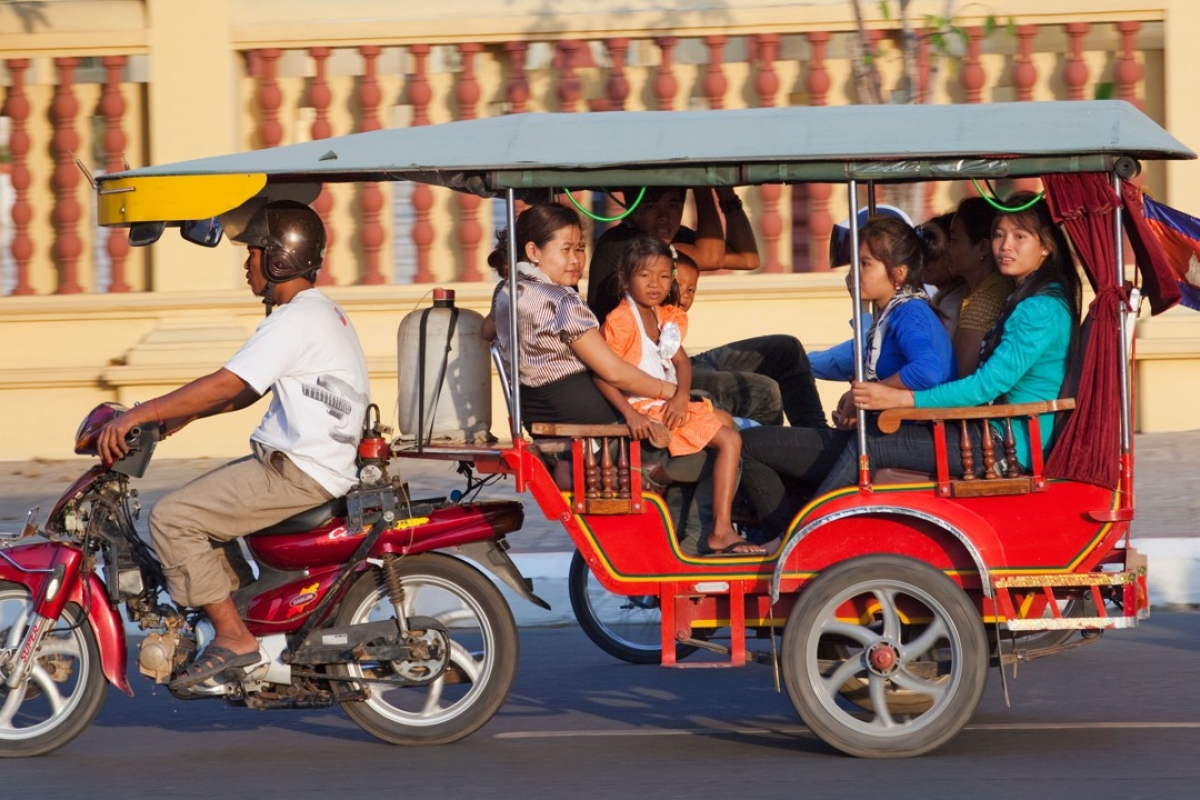
Cambodian tricycle drivers
August 29, 2024
多斯
描述
Phnom Penh: A few years ago, Cambodian tricycle drivers were the main competitors in the transport market, rivaling motorcycle taxi (moto dup) drivers. Their vehicles were seen as safer, with roofs to protect passengers from the sun and rain, and could carry more people or goods. However, since the introduction of Indian-made three-wheel taxis (Bajaj), commonly known as “Indian tuk-tuks,” the situation has changed. These vehicles have been taking over the market share once dominated by Cambodian tricycles, causing local drivers to lose income little by little.
Mr. Leang Hour, a Cambodian tricycle driver in Phnom Penh, said that local tricycle drivers are now facing serious challenges after the arrival of the Indian tuk-tuks, as they are continuously losing passengers. He said:
“The Indian tuk-tuks use gas, which costs less, so they can charge lower fares. If we lower our prices to match them, we won’t have enough money to support our families because our tricycles run on gasoline.”
He continued that in the past, Cambodian tricycle drivers had plenty of passengers — even if they waited in one spot, customers would still come. But now, it has become more difficult since the Indian tuk-tuks entered the market. These new vehicles are equipped with technology that allows passengers to call for rides via mobile apps, causing Cambodian tricycle drivers to lose customers steadily.
He added:
“I want to switch to an Indian tuk-tuk too because it looks more standard and is safer for passengers. It also runs on gas, which is cheaper than gasoline, so we can offer lower fares and carry more passengers.”
He went on to say:
“From what I know, the price of Indian tuk-tuks has increased. Before, they cost just over $2,000, but recently I heard they’ve gone up to nearly $3,000.”
Mr. E Sophat, President of the Joint Association for the Development of Cambodia, stated that it’s true Indian tuk-tuk drivers earn more income than those using traditional Cambodian tricycles. He explained that about 10% of the association’s members who could afford to buy Indian tuk-tuks for business are now earning more than the older tricycle drivers.
He said:
“The benefit of Indian tuk-tuks is that they are energy-efficient and equipped with technology that lets passengers find rides through apps.”
He continued:
“One thing to note is that Cambodian tricycle drivers who wait for passengers in front of hotels no longer get called by guests. Instead, the guests use their smartphones to book Indian tuk-tuks via apps. This has become a serious challenge for the income of local tricycle drivers.”
Mr. Sophat encouraged small-scale and private transport operators — such as moto dup and tricycle drivers — to adapt to the current market evolution by keeping up with new trends. He said:
“If people now use Indian tuk-tuks or app-based taxis to earn more income, local drivers should also make the switch. We know that upgrading or expanding a business requires capital, but if drivers lack funds, they can apply for loans from microfinance institutions that already partner with the association.”